Stretching is a fundamental part of any fitness routine, yet many people overlook its benefits or feel unsure about how to start. Whether you’re looking to improve your flexibility, reduce muscle tension, or simply move more comfortably throughout the day, stretching at home is an easy and effective option. This beginner’s guide will walk you through the basics of stretching, share simple routines, and offer tips to help you build a consistent practice.
Why Stretching Matters
Stretching helps improve the range of motion in your joints and muscles. It can increase blood flow, ease muscle tightness, and reduce the risk of injury. Regular stretching may also help relieve stress and improve posture, making daily activities more enjoyable and less taxing on your body.
Benefits of Stretching at Home
– Convenience: No need for special equipment or gym memberships.
– Cost-effective: Free and accessible anytime.
– Customizable: Tailor routines to your needs, focusing on areas that feel tight or sore.
– Improves mobility: Especially helpful if you have a sedentary lifestyle or spend long hours sitting.
Getting Started: Basic Tips for Safe Stretching
Before you begin, keep these safety tips in mind:
– Warm up first: Stretching cold muscles can cause injury. Try a light walk, marching in place, or gentle arm circles for 5 minutes.
– Stretch slowly and gently: Avoid bouncing or jerking movements.
– Hold stretches: Aim to hold each stretch for 20-30 seconds to allow muscles to relax.
– Breathe deeply: Focus on steady, deep breaths to help your muscles relax.
– Listen to your body: Stretch to the point of gentle tension, not pain.
– Be consistent: Aim to stretch at least 3-4 times a week for best results.
Essential Stretches for Beginners
Here are some simple stretches that target major muscle groups. Perform each stretch on both sides when applicable.
1. Neck Stretch
– Sit or stand tall.
– Slowly tilt your head toward your right shoulder until you feel a stretch on the left side of your neck.
– Hold, then switch sides.
2. Shoulder Stretch
– Bring your right arm across your chest.
– Use your left hand to gently pull your right arm closer to your body.
– Hold and switch arms.
3. Chest Opener
– Stand with feet hip-width apart.
– Clasp your hands behind your back and straighten your arms.
– Lift your chest and gently pull your shoulder blades together.
4. Cat-Cow Stretch (for back flexibility)
– Begin on your hands and knees.
– Arch your back up (cat), tucking your chin to your chest.
– Then, lower your belly towards the floor, lifting your head and tailbone (cow).
– Repeat slowly for 5-8 cycles.
5. Seated Hamstring Stretch
– Sit on the floor with one leg extended and the other bent with the foot against your inner thigh.
– Reach toward your toes on the extended leg until you feel a gentle stretch.
– Switch legs.
6. Quadriceps Stretch
– Stand near a wall or chair for balance.
– Bend your right knee and hold your ankle behind you with your right hand.
– Keep knees close together and push your hips forward slightly.
– Hold and switch sides.
7. Calf Stretch
– Stand facing a wall.
– Step your right foot back, keeping the heel on the floor.
– Bend your left knee and lean forward slightly.
– Switch legs.
Creating a Simple Stretching Routine
Building a routine can help you stay motivated and see progress. Here’s a sample beginner routine to get you started:
- Warm up for 5 minutes.
- Neck Stretch – 20 seconds each side
- Shoulder Stretch – 20 seconds each side
- Chest Opener – 30 seconds
- Cat-Cow – 5-8 rounds
- Seated Hamstring Stretch – 30 seconds each leg
- Quadriceps Stretch – 20 seconds each leg
- Calf Stretch – 20 seconds each leg
Try to complete this routine 3 times a week. As you become more comfortable, you can add more stretches or hold each stretch longer.
Tips for Staying Motivated
– Set a specific time: Stretching is easier when it becomes part of your daily routine, such as morning or evening.
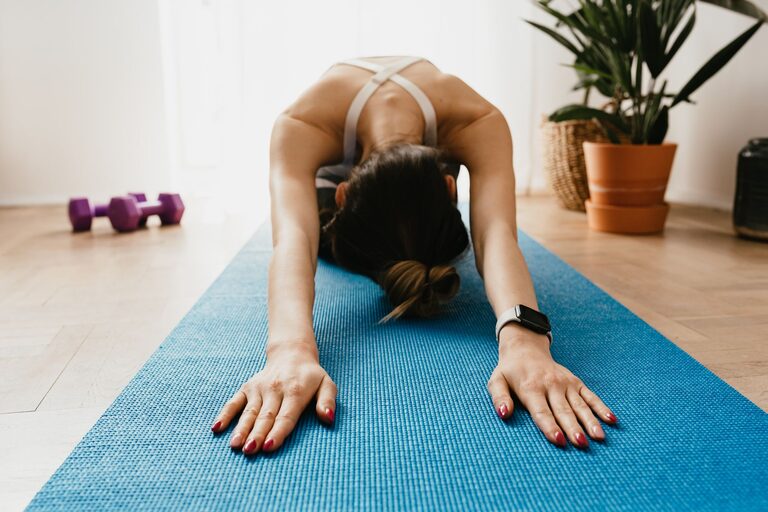
– Create a peaceful space: Find a quiet spot with enough room to move freely.
– Use reminders: Set alarms or put notes where you will see them.
– Track your progress: Notice improvements in flexibility or how your body feels.
– Combine with other activities: Stretch after workouts, walking, or even during TV time.
When to Avoid Stretching or Seek Guidance
If you experience sharp pain, dizziness, or discomfort while stretching, stop immediately. If you have injuries, chronic pain, or medical conditions, it’s best to consult a healthcare professional or a certified fitness instructor before starting a new stretching routine.
Final Thoughts
Stretching at home is a simple, low-cost way to enhance your physical health and well-being. With consistent practice and awareness of your body’s signals, you can enjoy increased flexibility, reduced tension, and a greater sense of relaxation. Start today with gentle movements and build a routine that fits your lifestyle.
Remember, the key is to be patient and gentle with yourself – progress takes time, but the benefits are well worth it!
About the Author